Articles on Markets & Economy


ECONOMICS




ENERGY

ECONOMICS


GLOBAL



ECONOMICS


Experts on Markets & Economy








Virtual Expos


Virtual Learning

Whether due to geopolitical tensions, the rise of AI, a crazier climate, or the global trading system diversifying away from the status quo, every single land use could be impacted in the years ahead. In this session, Patrick will review these significant externalities and their potential impacts on major residential and commercial real estate sectors. What is the housing market outlook? What looks good for commercial real estate investors, and what looks risky? What should we expect from the next Federal Reserve Chair in managing the Fed’s dual mandate of maximum employment and stable prices?

REAL ESTATE

Transaction volume in grocery-anchored retail surged 42% in 2025. Vacancy in the format sits at 4.0% - 230 basis points tighter than non-anchored retail. Institutional capital is reengaging, new supply is near historic lows, and the grocers anchoring these centers are posting double-digit visit growth. The question for investors isn’t whether grocery-anchored centers are performing. It’s why - and how to find the right ones.
Join Clyde Wood from Denver-based integrated real estate investment firm, Realberry, for a look at what’s driving performance in grocery-anchored retail - and the key projects they’re developing in the mountain west region.

REAL ESTATE
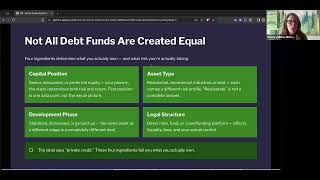
Private credit is getting a lot of attention right now, but not all private credit investments behave the same. With equity deals under pressure and public markets volatile, many investors are sitting on cash or searching for stable income without fully understanding how different credit strategies actually work. In this session, Whitney Elkins-Hutten, director of investor education at PassiveInvesting.com, will break down the key differences across private credit, including real estate-backed lending, structured notes, and corporate credit. She will explain where risk shows up in each, why chasing yield can backfire, and how structure impacts income, liquidity, and capital preservation. You’ll learn how to evaluate private credit opportunities, how to distinguish between stable income strategies and higher-risk lending, and how to decide if and where private credit fits within your overall portfolio allocation.

REAL ESTATE

Over the past four years, elevated interest rates have placed significant strain on multifamily sponsors across the US. That pressure is now translating into real opportunity as banks foreclose on overleveraged operators, creating a rare window to acquire quality assets at distressed pricing. Nitya Capital is uniquely positioned to capitalize on this through strong lender relationships, securing very favorable debt terms. This environment represents a compelling entry point into multifamily value-add investing, with basis resets not seen in years. In this webinar, Swapnil Agarwal will break down why this cycle presents a generational buying opportunity. If you are looking to deploy capital into distressed real estate with an experienced sponsor, this is a conversation you won’t want to miss.

REAL ESTATE
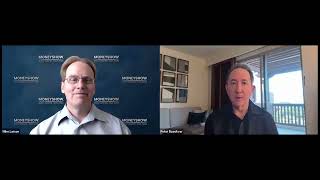
Enjoy a deep-dive discussion of the big-picture market drivers in Q2 – and the rest of 2026. Peter will walk you through what he expects on the economic growth, inflation, and monetary policy fronts. Plus, he’ll explain how to adapt to geopolitical developments like the Middle East conflict…and potential future flashpoints. It’s timely, actionable, in-depth education – so don’t miss this fantastic fireside chat!

GLOBAL

PRC Equity Fund is a Regulation A Fund qualified by the SEC to issue securities to accredited and non-accredited investors. PRC Equity Fund provides upfront capital to acquire and develop student housing near public universities. Working in tandem with its primary customer, Project PRC, it has access to virtually limitless capital through the tax-exempt bond market. Investors participate passively, earning an annualized 10% and participating in a 70% profit share.

REAL ESTATE
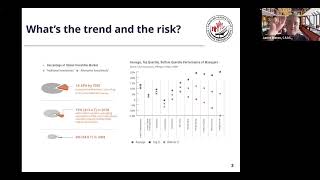
This talk will explain what liquid alternative funds are and how they can benefit retail investment portfolios. It will detail their advantages and disadvantages and the 6-year journey, initiated by the Ontario Securities Commission, up to promulgation (official law) and the 6-7 years since then. Viewers will also view updated performance information and their efficacy through market crises.

REAL ESTATE

Over the past four years, elevated interest rates have placed significant strain on multifamily sponsors across the US. That pressure is now translating into real opportunity as banks foreclose on overleveraged operators, creating a rare window to acquire quality assets at distressed pricing. Nitya Capital is uniquely positioned to capitalize on this through strong lender relationships, securing very favorable debt terms. This environment represents a compelling entry point into multifamily value-add investing, with basis resets not seen in years. In this webinar, Swapnil Agarwal will break down why this cycle presents a generational buying opportunity. If you are looking to deploy capital into distressed real estate with an experienced sponsor, this is a conversation you won’t want to miss.
REAL ESTATE
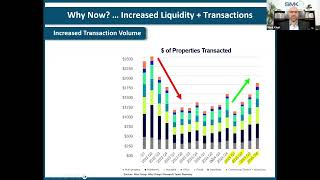
In today’s environment of economic uncertainty and shifting capital markets, many investors are turning to recession-resistant alternative commercial real estate strategies designed to generate durable income and long-term growth. This presentation will explore which sectors within commercial real estate have historically demonstrated resilience during economic downturns — and why structural supply constraints, demographic tailwinds, and disciplined underwriting position them for strong performance in the next cycle.
With valuations having corrected 20–30% and now stabilizing, new development pipelines sharply reduced, and institutional capital beginning to flow back into the market, disciplined investors are entering at a fundamentally stronger basis — positioned to capture durable income, long-term appreciation, and compelling tax advantages.

REAL ESTATE

Face-to-Face Conferences






Conferences
Cruises





Cruises


MoneyShow.com’s renowned market experts help you go beyond the latest market news to unravel the effects of geopolitical events on the global economy, analyze the current market environment to identify hot spots for potential investments, and discern the long-term market and economic trends and opportunities around the world.
There are no sure-shot techniques for market forecasting and analysis. If one were developed, it wouldn’t work for long, since as everyone applied it, its foundation would change significantly. There’s an excess of data in the world today, so the trick is to spot the one or two key variables in a specific time. They could be Fed policy, consumer behavior, foreign trade wars, etc. Any these factors could change, sometimes several times, throughout the year. That’s why it’s important to keep up with market news and the ever-changing conditions. For a framework to add value, it must entail market-moving events that have a good chance of occurring, but are not yet within the consensus.
Research has consistently shown that Investors are more surprised by bear than bull markets, and economic and financial market downturns unfold faster than upswings. Successful investing entails studying varying perspectives, then folding in history, experiences, hunches—and great timing. The goal is to identify the significant but undiscounted aspects of the outlook. This is where the true opportunities for investors lie and where our experts excel.
We feature more than just stock market news. Our expert contributors are renowned investing and trading veterans who have survived—and thrived—in all kinds of market conditions and they share in-depth intelligence about the markets and the catalysts driving them to help you chart your path to growth and prosperity in any market environment.